The Shift
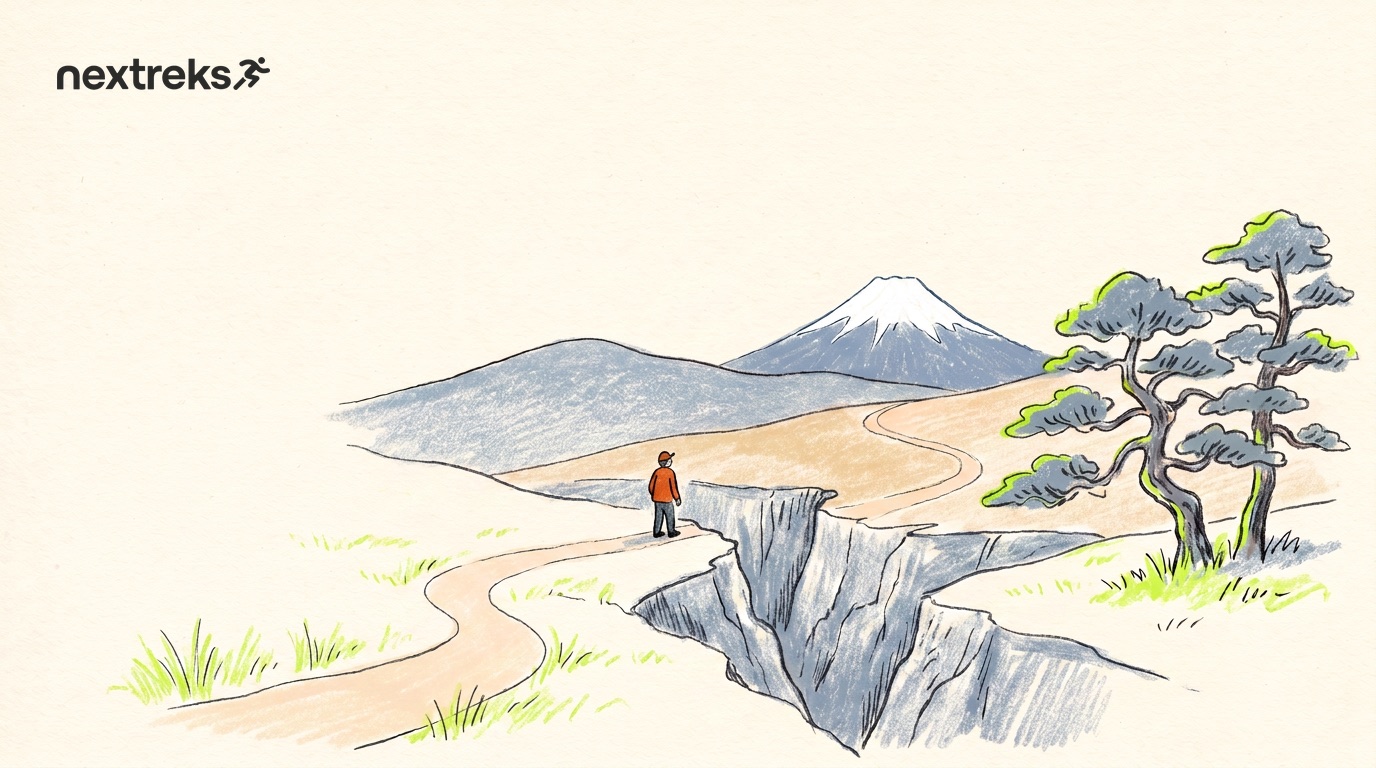
A student walks in the door after school and gives the answer she gives most afternoons when asked how her day was: boring. Backpack down, door shut, and yet ninety minutes later she's still completely locked in, grinning, focused, running back the same level she's already lost five times, dead set on cracking it on try number six. Same kid, same day, but a night-and-day difference in how much attention she's giving.
That gap isn't about willpower. It's about design.
The pull that kicks in right after homework wraps, wanting another shot, chasing some visible sign of getting better, grinding through a tough spot because stopping feels worse than losing, that instinct doesn't vanish the second she sits down at a school desk. It's simply not being tapped into.
What Is Gamified Learning?
Gamified learning is not school with a game bolted on. It is the deliberate use of game mechanics, clear goals, visible progress, meaningful choice, and fast feedback inside real academic or skill-building work.
Points and badges are the most visible layer, and also the shallowest. On their own, a leaderboard added to an existing worksheet does very little. Research consistently shows that what predicts whether gamification works is not whether points exist, but whether the system is tied to a genuine objective, gives students real choice in how they get there, and tells them quickly whether their attempt worked, according to Huang, Ritzhaupt, et al.'s 2020 meta-analysis and a 2021 meta-analysis on gamification and behavioral change.
That distinction describes where the field is heading. The first wave of gamified education was mostly decoration, a progress bar stapled onto a textbook. The current wave treats the game mechanics and the learning objective as one thing, not two.
Why This Matters, Precisely
Student engagement has long shown a real structural pattern: it tends to be highest in elementary school and lower by high school, according to Gallup's long-running Student Poll. That gap has persisted for years and reflects something durable about how school is typically structured for older students.
There is encouraging news too. Gallup's most recent national data, from 2025, found that all eight measures of student school engagement reached their highest levels on record, with the largest gains reported among high schoolers. Even with that improvement, a meaningful share of teens still describe school as something to get through rather than something that holds their attention, which is exactly the space where well-designed gamification has room to help.
The evidence that thoughtfully designed gamification improves learning outcomes has moved well past a handful of case studies. Independent peer-reviewed meta-analyses, pooling dozens of studies and thousands of students, converge on a small-to-medium, statistically significant positive effect of gamified instruction on learning outcomes.
0.46, overall effect size (Hedges' g) across 30 independent studies and 3,083 participants, from Huang, Ritzhaupt, et al., Educational Technology Research and Development, 2020.
0.48, overall effect size (Cohen's d) on student behavioral outcomes, from a 2021 meta-analysis in the International Journal of Environmental Research and Public Health.
$1.04 billion, Duolingo's full-year 2025 revenue, up 39% year over year on a constant-currency basis, on a product built around a gamified learning loop.
Estimates for the size of the gamification-in-education market vary enormously by vendor and definition, from under $1 billion to well over $100 billion for 2025, but nearly every forecast points to sustained double-digit or higher annual growth through the early 2030s.
Duolingo is a successful real-world reference point, not because it is an education company in the traditional sense, but because it is public, meaning its numbers are audited rather than self-reported. It crossed $1 billion in annual revenue for the first time in 2025, on a product built almost entirely around gamified mechanics rather than traditional instruction.
Why It Doesn't Always Work
Here is the part most coverage of gamification skips: it does not always work, and the research explains why. The same meta-analyses that find a real positive effect also find that the effect size swings enormously based on design. Programs where the game layer is superficial, generic points for generic work disconnected from any real skill, show weak or inconsistent results. Programs where the mechanics are load-bearing, where the challenge, choice, and feedback are all real, show the strongest and most consistent gains.
A few things tend to separate the two:
The challenge has to be a real task, not a quiz dressed up with a timer.
The student needs a genuine choice in how they approach it, not a single correct path with a badge at the end.
Feedback has to be fast enough that the student can tell, immediately, whether the attempt worked.
That is also a fair description of why gamification has a mixed reputation in schools. Most programs that tried it went for the visible layer, points, badges, leaderboards, without rebuilding what students were actually doing. The mechanics were real. The underlying work was not. Students noticed the difference immediately, because students always do.
Where This Leaves Students
None of this is a case for fun for its own sake. It is a case for taking seriously what the data has consistently shown: the engagement gap between elementary and high school is a design problem, and it is one of the more solvable problems in education right now.
Nextreks is built on the working half of that research, not the decorative half. Every Challenge sits inside a real skill domain from the Pathsmith framework, every island gives a student a genuine choice in how they tackle it, and every Trait Card is feedback that means something: verified evidence of a real skill, not a badge for showing up.
Sources
Gallup, "Gen Z Students More Engaged in School, Ready for the Future," 2025.
Gallup Student Poll, longitudinal engagement data.
Gamification-in-education market sizing, aggregated from multiple 2025 to 2026 market research reports; figures vary widely by vendor and should be treated as directional (low estimate, high estimate).
Kevin KlauszDirector of Growth and Partnerships @ Nextreks
Kevin@nextreks.com