Durable Skills: The Why
The average teenager spends four years studying the periodic table and zero hours practicing how to adapt to a change in leadership. Only one of those will show up in every job she ever has.
Picture a student walking into her first professional project. She was a 4.0 student throughout high school, a whiz at solving equations and sharp at breaking down old literature.
On her first assignment, her manager sends over a folder of documents with a one-line memo: “Figure it out.”
There is no right answer to have studied. No formula to plug her problem into.
She has spent four years being praised for finding the correct answer quickly. Now she has to find an answer that does not exist yet. Every hard skill she has sharpened, including equations, analysis, and test-taking, has no clear path to follow.
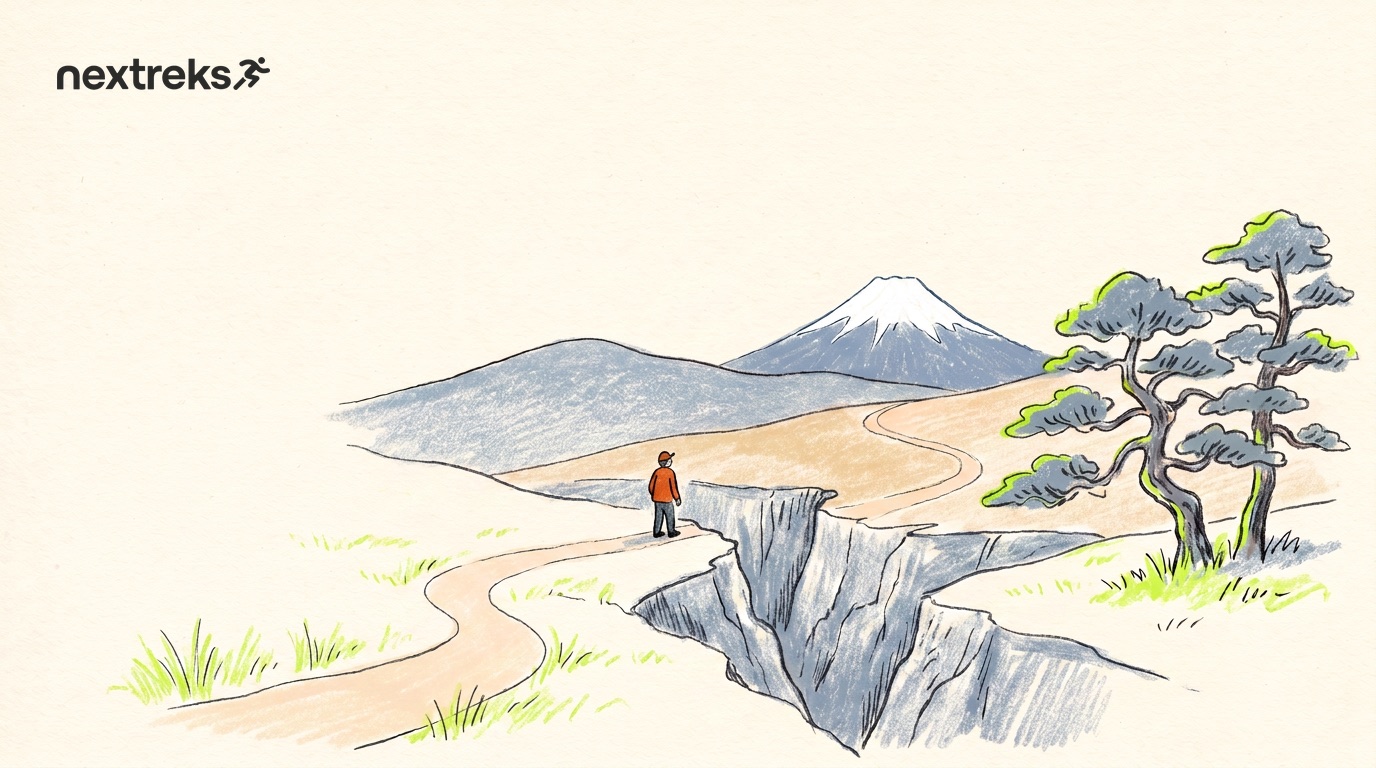
She has to build a road using an empty toolbox.
That moment does not stay contained to a first professional project. It appears in every corner of a career, and increasingly, it appears sooner than students expect.
What are durable skills?
Durable skills are human capabilities that do not expire. They include communication, adaptability, critical thinking, collaboration, and leadership.
They used to be called “soft skills,” often in a way that implied they were nice to have rather than essential. That label never fit.
The term “durable” describes something specific. These skills transfer across careers. They do not have a shelf life. Unlike narrow, tool-specific technical skills, they become more valuable as a person gains more contexts in which to use them.
They show up in the moments that actually decide outcomes:
The interview.
The project that goes sideways.
The conflict with a teammate.
The unfamiliar problem with no established answer.
The conversation that turns a stranger into a resource for the next ten years.
Why is this urgent now?
Because the shelf life of everything else has become shorter.
IBM’s research places the half-life of many skills in technology and HR at roughly 2.5 to 5 years. Narrow, tool-specific technical skills can change even faster.
The World Economic Forum’s Future of Jobs Report 2025 found that employers expect 39% of key skills required in the job market to change by 2030. At the same time, creative thinking, resilience, flexibility, leadership, and analytical thinking are rising in importance as AI and automation reshape work.
America Succeeds and Lightcast analyzed nearly 76 million U.S. job postings for the Durable by Design report. They found that:
76% of job postings request at least one durable skill.
Nearly half request three or more durable skills.
Eight of the ten most-requested skills across those postings are durable skills.
Employers are not just requesting these skills. They are changing how they hire because of them.
NACE’s Job Outlook 2026 Spring Update found that employers reviewing entry-level resumes seek evidence of teamwork, problem-solving, and communication. The report also states that almost 70% of respondents use skills-based hiring.
Technical skills are not going away. AI fluency is appearing across these same lists.
But the premise that hard skills alone are the safe bet has quietly stopped being true. The skills that depreciate most quickly are often the ones students are told to prioritize most heavily.
Why does the gap exist?
Durable skills are not foreign to children.
They are among the first things parents teach a toddler once she becomes socially aware. How to wait her turn. How to ask for help. How to notice when someone else is upset. How to recover after frustration. How to work through conflict.
Elementary school reinforces these skills through group projects and recess conflicts that few people label as curriculum.
Then, somewhere around middle school, the deliberate teaching often stops.
Not because the skills stop mattering. The evidence points in the opposite direction. The problem is that there is no formal, measurable place for these skills to live once academics take over.
Nobody assigns a grade to adaptability. Nobody drills leadership in the same way they drill algebra. Nobody asks students to build a visible, credible record of how they handled ambiguity, collaboration, setbacks, or responsibility.
The skills that appear in nearly every job a student will ever have receive some of the least structured practice in their education.
That is the actual gap. Durable skills are not new, and they are not unproven. The education system simply stopped treating them as capabilities students should build deliberately once they became difficult to grade.
The student who walks into her first professional project with an empty toolbox is not unusual. She is the norm.
The students who do not hit that wall are the ones who have had a chance to practice “figure it out” before it counted, through meaningful work with real constraints and feedback, long before their first paycheck depends on it.
Closing the gap
Extracurriculars already help students build durable skills. Sports require communication and accountability. Theatre develops public speaking and confidence. Art builds persistence through creative blocks. Clubs create opportunities to organize, lead, and collaborate.
Those experiences matter.
But organic exposure is not the same as deliberate practice. A student can play on a team for four years without being able to explain how she handled conflict, made a decision under pressure, or improved the way she works with others.
Students need repeated opportunities to practice these skills intentionally. They also need credible proof of what they actually did.
That is the gap Nextreks is built to close.
Nextreks gives high school students 80 Challenges, organized across eight islands and built on the licensed Pathsmithdurable-skills framework. Each Challenge asks a student to solve a real problem, apply specific durable skills, and produce evidence of the work.
That evidence becomes part of a student’s growing portfolio, a verified record of how they communicate, adapt, think critically, collaborate, and lead.
Not a list of traits they claim to have.
Proof.
Sources
IBM, “Embracing the Future of HR by Becoming an AI-First Enterprise.”
America Succeeds, “Durable by Design: Why Skills for the Future Start Now.”
National Association of Colleges and Employers, Job Outlook 2026: Spring Update.
Education Design Lab, Toward a Leveled Durable Skills Competency Framework.
Kevin KlauszDirector of Growth and Partnerships @ Nextreks
Kevin@nextreks.com